SinghGill
-
Posts
5 -
Joined
-
Last visited
SinghGill's Achievements






-

preservation Archiving SikhSangat.com's Forum for Posterity
SinghGill posted a topic in WHAT'S HAPPENING?
WJKK WJKF! How long will this forum remain online for in a readable & accessible state? It appears susceptible to shut-down. It would be a shame if all the forum's content from over the decades is lost in such an event due to servers hosting this forum shutting-down. This forum, whilst not currently active, remains an important repository of the Sikh religion online. It also is a fundamental aspect of Sikh cyber culture that existed from the early Internet period from the 2000's to 2010's before the domination by big social-media sites that consolidated the community. Thus, have the web-masters of this forum considered archiving this forum's contents before it is lost forever? I can assist you in this by saving the content to the Internet Archive on your behalf. Please let me know your thoughts about such an endeavour and I hope you may consider the possibility of archiving the forum for posterity. Future generations of Sikhs and Sikh researchers will be grateful. Kind regards, Theth Panjabi (you can find me on IG at theth.panjabi and on X/Twitter at ThethPanjabi)
-
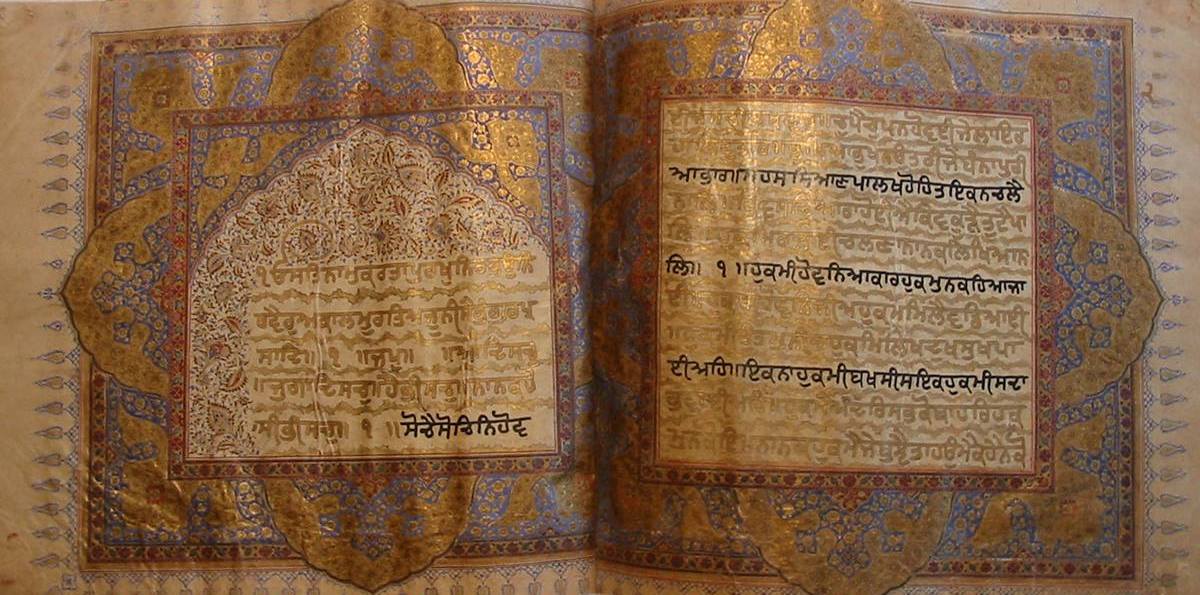
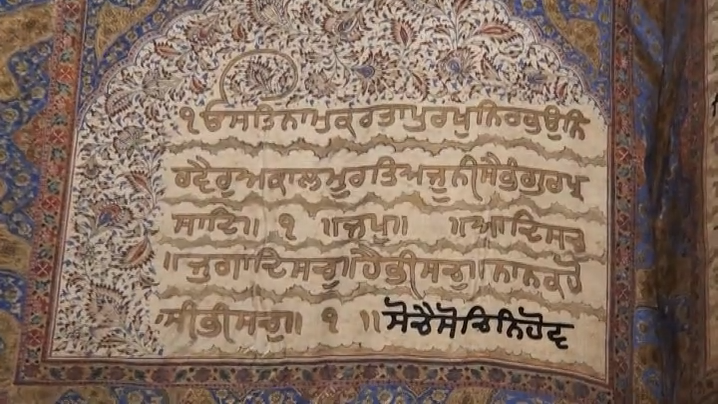
vadda ghallughara A claimed master-copy of the Damdami Bir recension is said to reside at a gurdwara in Kuthala. It was rescued during the Vadda Ghallughara genocide. Here is a video documenting the tale, gurdwara, and manuscript. I have provided an English translation too
SinghGill posted a topic in GURBANI | SAKHIAN | HISTORY
Video on the tale, gurdwara, and manuscript: link As the story goes, during the Vadda Ghallughara genocide against the Sikhs perpetrated by the Afghan Durrani Empire on 5–6 February 1762, not only were Sikh lives lost, but our original Damdami Sahib Bir recension was also lost in that carnage. However, over the years I have spent researching our history, many claimed it was taken back to Afghanistan by Ahmad Shah Abdali's troops as loot whilst others said it was secretly hidden somewhere by the Singhs for safe-keeping. As of today, it remains untraceable and I presume it is gone for good. However, I came across a couple of articles stating that there were actually around five master-copies of the original Damdami Bir, with one of these copies being safeguarded by the jatha of Bhai Sudha Singh of the Shaheedan Misl. "It is said that the tenth Sikh master Guru Gobind Singh had got five birs written at Damdama Sahib. The bani (writings) of the ninth Sikh master Guru Tegh Bahadur were incorporated in these birs. These five birs were given to different jathas (groups) of Sikhs by Guru Gobind Singh to be safely installed. One bir was being taken by Sudha Singh who was leading a jatha of 19 Sikhs, when Abdali'[s] forces stormed Kup-Rohira and killed thousands of Sikhs. Though all 19 Sikhs were massacred by Abdali, Sudha Singh somehow brought the bir to Kuthala. Since then it has been kept at village gurdwara." (Times of India, 2012) The gurdwara today [Gurdwara Shaheed Baba Sudha Singh Ji in Kuthala] has a certain historical manuscript that they claim is one of the five master-copies of the Damdama recension. You can see close-up shots of the bir in the video posted. I will also share close-up images of its folios in the comment section. I will also provide a faithful English translation of the video's narration so non-Punjabi speakers may benefit from this post. I will leave the question on whether this bir is authentic or not to your judgement but I will provide my own analysis below. English translation of the video's narration: The Guru-form Guru Khalsa Holy Congregation (Sadh Sangat) Ji, Waheguru Ji Ka Khalsa, Waheguru Ji Ki Fateh. The Gurdwara Sahib that the congregation is currently beholding is situated in Village Kuthala, near Malerkotla, in the Sangrur district of Punjab. A very great treasure is preserved within this Gurdwara Sahib. The history of this Gurdwara Sahib is very closely related to the Vada Ghalughara (The Great Holocaust) that took place in February 1762. Baba Sudha Singh Ji, the third head of the Shaheedi Misl, arrived at this location considering it a safe place. He brought with him that sacred holy scripture (Saroop) which the Tenth Father, Sri Guru Gobind Singh Ji, had personally dictated to Bhai Mani Singh Ji on the holy land of Damdama Sahib. Upon arriving, he personally performed the last rites (cremation) of 19 martyred Sikhs at this site. As he prepared to leave to take command of the Jatha (the Sikh contingent), the sacred holy scripture he had brought was enshrined at this very location. At that time, this place was known as Dera Jaga Sidh, but nowadays, a very beautiful building stands here in the name of Gurdwara Sahib Shaheedi. The sacred holy scriptures that were enshrined at that time are today ceremoniously displayed (Prakashwan) with great respect every Channi Dashmi (the tenth day of the bright lunar fortnight) for the congregation to behold. Devotees from within the country and abroad arrive to catch a glimpse of these sacred scriptures and receive the Guru's blessings. Every year, an annual Gurmat Samagam (religious congregation) is held for five consecutive days in memory of the martyrs of the Great Holocaust, concluding on Magh Sudi Dashmi. Furthermore, a book containing the full detailed history—titled after Shaheed Baba Sudha Singh Ji and the Hand-written Holy Sri Guru Granth Sahib Ji—was released in February 2013 by the managing volunteers based on historical research. It was released by the 14th head of the Shaheedi Misl, Singh Sahib Baba Makhan Singh Ji (the current head of Baba Bakala Sahib), the Meet Jathedar Singh Ji, and Sant Gurdev Singh Ji of Anandpur Sahib (the current head). The congregation can obtain spiritual benefit by reading it. Waheguru Ji Ka Khalsa, Waheguru Ji Ki Fateh. My analysis: In my humble opinion (which may be incorrect), this bir is not a master-copy of the Damdami Bir. It more closely resembles the highly-decorated birs of the Kashmiri-style that were created during the reign of the Sikh Empire in the first half of the 19th century. We can see this bir has highly illuminated and illustrated angs (folios), which took the great skill of a master artisan to make, which required resources to pay and patronize. Usually, the manuscripts during the Sikh Empire were the most elaborately decorated, as this was when the Sikhs were at a high-point, masters of the land, possessing vast amounts of resources that they could use to fund such endeavors. Therefore, whilst the story may be true and a master-copy of the Damdami Bir recension may have once been at this location, I am not convinced that this particular manuscript is it. I may be mistaken and I am open to constructive criticism. 1633648456_GurdwaraHistory.mp4
-
In 2019, a series of events occurred that led to a paradigm shift in the future conservation of Sikh heritage. At Gurdwara Sri Darbar Sahib in Tarn Taran, founded by Sri Guru Arjan Dev Ji, there is a historic Darshani Deori gateway that was constructed during Sikh-rule by Maharaja Ranjit Singh’s grandson, Kunwar Nau Nihal Singh, who felt a deep connection to the sacred gurdwara. However, as with all buildings, overtime lack of surveillance and maintenance led to cracks developing in the structure. The Shiromani Gurdwara Parbandhak Committee passed a resolution allowing the Kar Seva baba Jagtar Singh to “restore”, “renovate”, or “reconstruct” the Darshanj Deori. On 14 September 2018, a Jagtar Singh’s group attempted to topple the structure but local Sikh activists stopped them, saving it. By October of the same year, the resolution was withdrawn and the decision was put on-hold. However, that didn’t stop the zealous baba in his mission to destroy the historical building. The following year on the night of Saturday, 30 March 2019 at 9:00 P.M., a 300-man strong “army” of Kar Seva workers under Jagtar Singh armed with sharp-edged weapons, baseball bats, hammers, and sticks started toppling the structure, allegedly without the SGPC’s permission. For two hours, they continued their destructive rampage on the edifice ignoring desperate calls to stop their demolition from local Sikhs. The SGPC ignored calls trying to draw their attention to the issue. Finally at around 11:00 P.M., a police team led by deputy-superintendent Kawaljit Singh arrived and intervened, putting a stop to the Kar Seva destruction. Sadly, four domed-structured and other features located at the top of the building had been destroyed but the rest of the building was saved, for now. Local Sikhs demanded that a criminal case be put against the Kar Seva baba Jagtar Singh and warned that they would protest if this was not done. The manager of the gurdwara complex, Partap Singh, claimed to have called Jagtar Singh and told him to cease the vandalism but he did not lodge a police complaint. Sikhs were rightfully outraged at the wanton razing of their historical heritage by corrupt and ignoramus parties. The SGPC, seeing the anger of the Sikh Quom, decided instead to renovate and conserve the historical deori rather than demolishing it and rebuilding a new one. Before initiating the renovation work, a meeting was held in this regard and experts of Directorate of Cultural Affairs Archaeology and Archives Museum Punjab, Guru Nanak Dev University, Amritsar, local intellectuals and members of Sikh organisations assembled for discussion. The SGPC formed a three-member panel to investigate the issue. Partap Singh, manager of the gurdwara, was suspended for failing to prevent the dismantlement of the deori. All further gurdwara repair-related responsible were withdrawn from the Jagtar Singh-led Kar Seva group. An alliance of 30 Sikh organizations demanded an independent probe into the role of the SGPC and criminal action against the Kar Seva group. Surely, someone must be profiting from this affair, whether that means pocketing funds gathered under the guise of well-meaning Kar Seva from the Sikh community or other nefarious activities. The darshani deori would eventually be restored over the years following the incident by an archeological agency under the guidance of experts, without tampering with the original structure. This remains a critical moment in Sikh history: for the first time ever, the Sikh community stood-up and said NO, enough is enough. Too much has been lost, we will not allow more to be taken from us. The Kar Seva babas have destroyed 90-95% of Sikh heritage in Punjab within the past decades, the SGPC allows them to do so. Only we as Sikhs have the power to stop them. We have to raise our voice and allow ourselves to be heard! Staying silent and docile means more of our history will be stolen from us by these dushman, who prefer to pocket funds while converting Sikh history into mythology by wiping out all evidences of our past from this Earth. IMAGE CREDITS These photographs were sourced from various news articles and social-media posts documenting the incident. Two of the historical photographs (both from 1934) were provided by the Sikh History Research Centre of Khalsa College while another historical photograph was sourced from SikhMuseum.com. The colour photograph of the darshani deori taken prior to the destruction was sourced from the Facebook account of Rajwant Singh (Washington).
-
I have a mystery to share with you all: What is this place depicted in this painting? This is a painting kept in the collection of the Himachal State Museum of a supposed gurdwara dating to ca.1875. Interestingly, B.N. Goswamy in his book (which actually uses this specific painting as cover-artwork) claims it is possibly the interior of the Darbar Sahib/Harmandir Sahib (“Golden Temple”) in Amritsar. However, it is immediately obvious that is not the case, as the layout/structure/architecture of the space does not resemble the interior of Darbar Sahib at all. So where could this place be? One can wonder. A possible identification made by the Twitter user Ontheperiphery9 is that this may be the interior of Gurdwara Sis Ganj Sahib in Delhi! This is an interesting suggestion. Whilst Gurdwara Sis Ganj Sahib underwent extensive Kar Seva renovations in the 20th century, one does find superficial similarities in the layout/architecture of the current gurdwara & whatever gurdwara is depicted in this historic painting. How about you, what are your thoughts/theories on the identity of this space? Does it perhaps still exist or has it been lost to time in the various renovations/remodellings of Sikh sacred spaces in the years since this painting was made? Image 1) Painting as displayed in the Himachal State Museum Image 2) Caption of the painting at the museum Image 3) Cover of B. N. Goswamy’s book, which uses the painting as cover-art Image 4) Caption provided in the book for the painting Image 5) Photograph of the interior of the modern Gurdwara Sis Ganj Sahib in Delhi, notice any similarities to the painting?
-
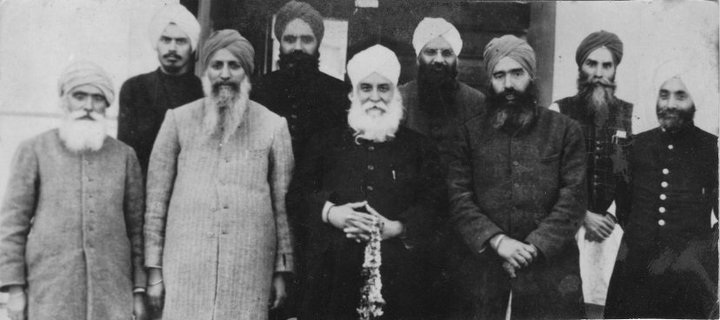
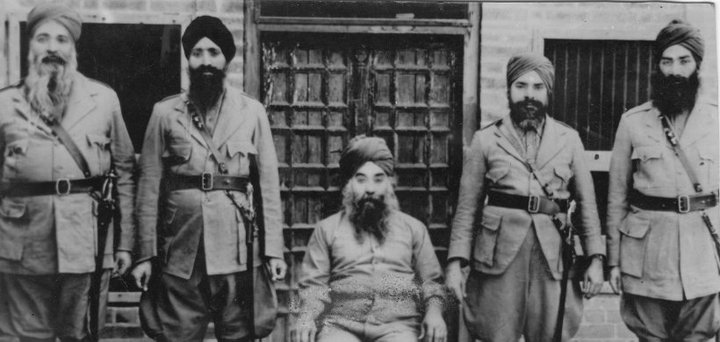
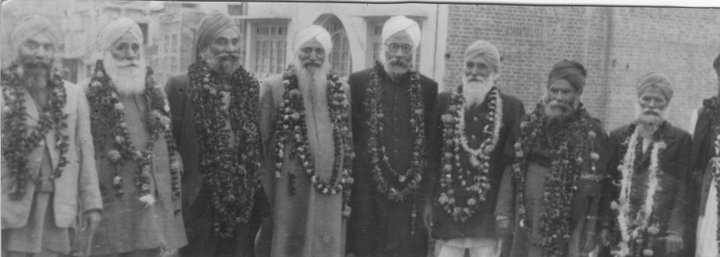
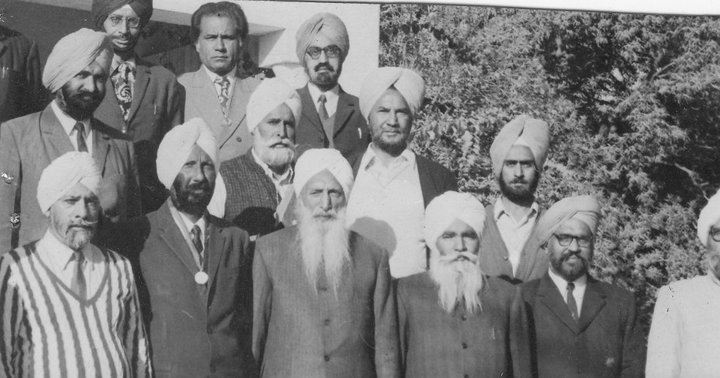
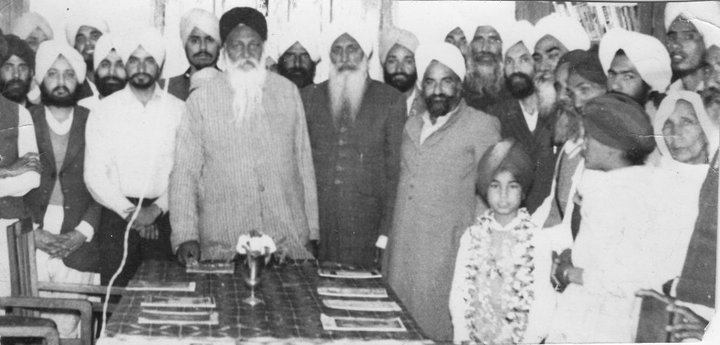
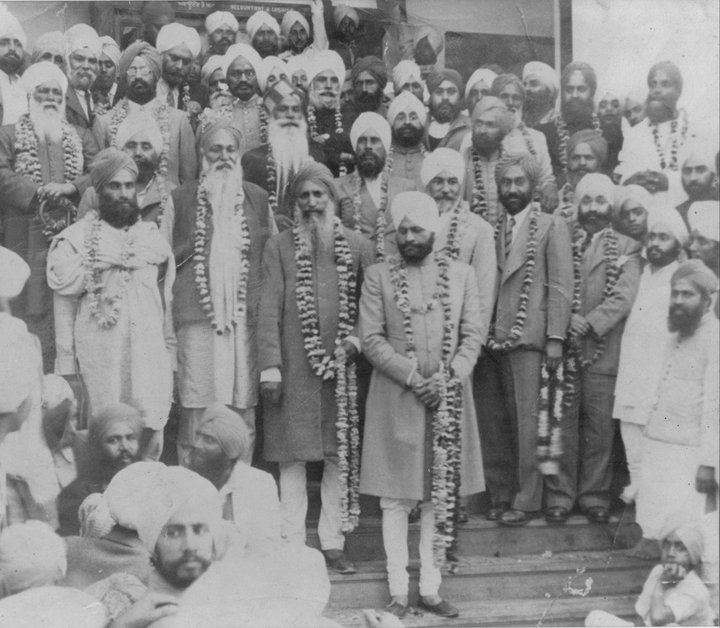
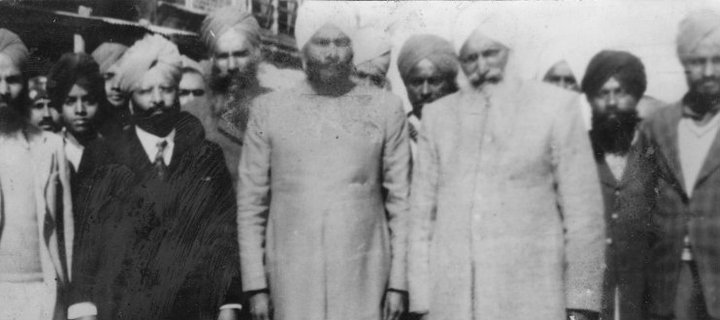
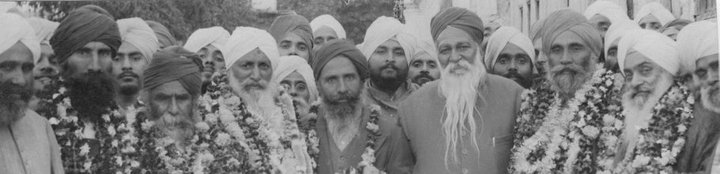
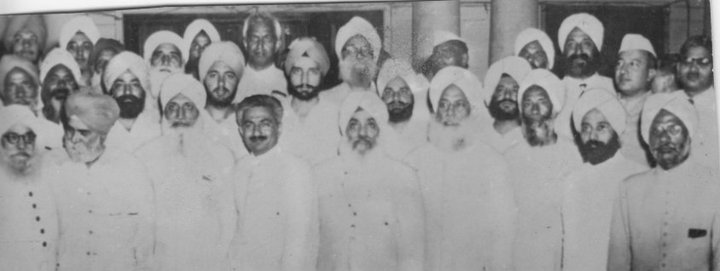
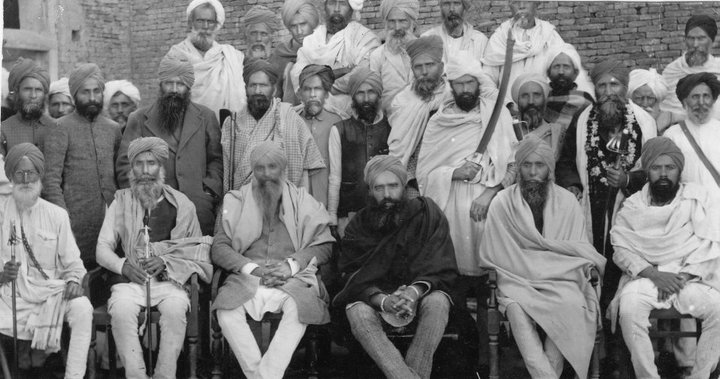
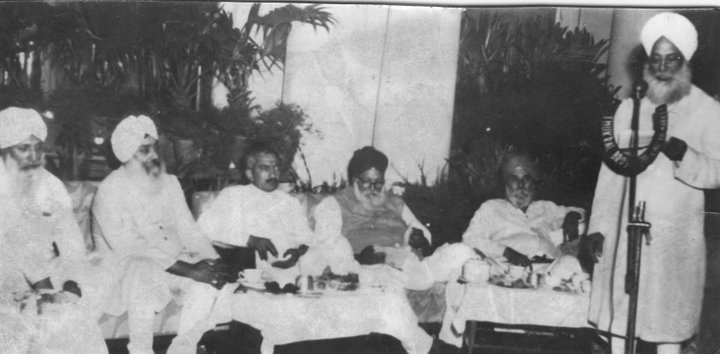
Hello all, I have been a long-time lurker for over a decade and this is my first post here. I came across some old photographs of Sikh religious/political leaders and/or luminaries from the 20th century and I am kindly asking for assistance with identifying who is who in the pictures so that I could take the liberty of labelling/marking each person in the photographs correctly as I archive them for future generations. Thank you!